Machine Learning Course Training in Gurgaon
Machine Learning is the future innovation with ML tools like TensorFlow , PyTorch and Scikit-Learn) to build, train & deploy machine learning (ML) models. We are delivering this training in Gurgaon where-in core ML principles to let computer learn automatically without need to human intervention. Machine Learning use statistics and algorithms to recognize patterns and to decision-making accordingly. This training will be taught using hands-on training to become successful ML Engineer.
- Develop ML model scripts/templates to automate ML building, training & deployment using MLFlow that will reduce costing & speed-up ML deployment lifecycle.
- Training program will provide interactive sessions with industry professionals
- Realtime project expereince to crack job interviews

- Course Duration - 3 months
- Get training from Industry Professionals
Train using realtime course materials using online portals & trainer experience to get a personalized teaching experience.
Active interaction in sessions guided by leading professionals from the industry
Gain professionals insights through leading industry experts across domains
24/7 Q&A support designed to address training needs
Machine Learning Course Training Overview
Shape your carrer in Machine Learning with future innovation and ML tools like TensorFlow , PyTorch and Scikit-Learn) to build, train & deploy machine learning (ML) models. We are delivering this training in Gurgaon where-in core ML principles to let computer learn automatically without need to human intervention. Machine Learning use statistics and algorithms to recognize patterns and to decision-making accordingly. This training will be taught using hands-on training to become successful ML Engineer. This training also helps to understand how to Automate ML Infrastructure using MLOps pipelines & MLFlow templates. ML models will be deployed on Hybrid Cloud platforms (AWS, Azure, GCP & others) & integrate it with MLOps pipelines to automate the entire ML lifecycle. This training will provide hands-on training & covers ML modules, workflows, variables & other concepts to speed, scale & automate model building, training & deployment process.
- Benefit from ongoing access to all self-paced videos and archived session recordings
- Success Aimers supports you in gaining visibility among leading employers
- Industry-paced training with realtime scenarios using ML Learning tools (TensorFlow, Scikit-Learn & others) for ML model development, deployment automation.
- Real-World industry scenarios with projects implementation support
- Live Virtual classes heading by top industry experts alogn with project implementation
- Q&A support sessions
- Job Interview preparation & use cases
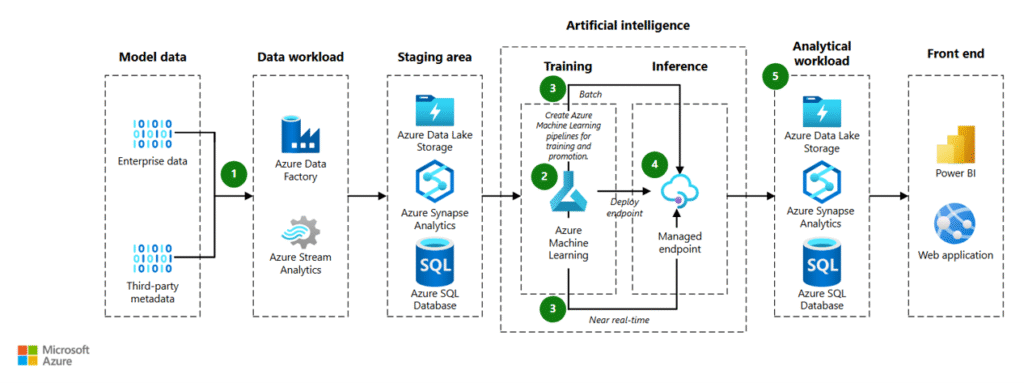
Explain ML Engineers?
ML Engineers build ML applications to let computer learn automatically without need to human intervention. Machine Learning use statistics and algorithms to recognize patterns and to decision-making accordingly & uses development frameworks like TensorFlow, Scikit-Learn and others for intelligent automation that will allow organizations to boost decision making and also thrive business growth with improved customer satisfaction. ML engineers build optimized ML workflows, deployment and maintain the ML development life cycle to deliver high-precise solutions to the clients using ML frameworks/workflow builders.
Role of ML Engineer?
ML Engineers automate business processes via ML development frameworks like TensorFlow, Scikit-Learn and others for intelligent automation that will allow organizations to boost decision making and also thrive business growth with improved customer satisfaction. ML engineers build optimized workflows, deployment and maintain the ML development life cycle to deliver high-precise solutions to the clients using ML frameworks/workflow builders.
Who should opt for ML Engineer course?
ML Engineer course accelerates/boost career in Data & Cloud organizations.
- ML Engineer manages the end-to-end ML deployment life cycle using MLFlow and model building templates.
- ML Engineer – Implementing MLOps Pipelines using MLFlow & ML Tools.
- ML Developers – Automated ML deployment & workflows using MLFlow & ML Learning Tools.
- ML Architect – Leading Machine Learning & AI initiative within enterprise.
- Cloud and ML/AI Engineers – Deploying ML Application using ML automation tools including MLFlow, Kubeflow, Tensorboard & others across environments seamlessly and effectively.
Prerequisites of ML Engineer Course?
Prerequisites required for the ML Engineer Certification Course
- High School Diploma or a undergraduate degree
- Python + JSON/YAML scripting language
- IT Foundational Knowledge along with DevOps and cloud infrastructure skills
- Knowledge of Cloud Computing Platforms like AWS, AZURE and GCP will be an added advantage.
Kind of Job Placement/Offers after ML Engineer Certification Course?
Job Career Path in ML Engineer (Cloud) using MLFlow & ML Learning frameworks/tools.
- ML Engineer – Develop & Deploying Machine Learning models within cloud infrastructure using ML Learning frameworks & similar tools.
- ML Engineer – Design, Developed and build automated ML workflows to drive key business processes/decisions.
- ML Architect – Leading ML/DL initiative within enterprise.
- ML Engineer – Implementing ML Pipelines using MLOps & Machine Learning frameworks/ Tools.
- Cloud and ML Engineers – Deploying ML/DL Application using Machine Learning tools including MLFlow across environments seamlessly and effectively.
| Training Options | Weekdays (Mon-Fri) | Weekends (Sat-Sun) | Fast Track |
|---|---|---|---|
| Duration of Course | 2 months | 3 months | 15 days |
| Hours / day | 1-2 hours | 2-3 hours | 5 hours |
| Mode of Training | Offline / Online | Offline / Online | Offline / Online |
Machine Learning Course Curriculum
Start your carrer in AI with certification in Machine Learning Course course, that will help in shaping the carrer to the current industry needs that need ML automation using intelligent ML workflows like TensorFlow, Scikit Learn & others in every domain & sphere of the industry that will allow organizations to boost decision making & also thrive business growth with improved customer satisfaction.
Machine Learning
Module 1 – Data Preprocessing
Data Preprocessing
- Importing the Dataset
- Missing Data
- Categorical Data
- Splitting the dataset into Train & Test
- Feature Scaling
Module 2 - Regression
Regression
- Simple Linear Regression Explanation
- Simple Linear Regression using Python
- Simple Linear Regression using R
Multiple Linear Regression
- Multiple Linear Regression Explanation
- Multiple Linear Regression using Python
- Multiple Linear Regression using R
Polynomial Linear Regression
- Polynomial Linear Regression Explanation
- Multiple Linear Regression using Python
- Multiple Linear Regression using R
SVR (Support Vector Regression)
- SVR Explanation
- SVR using Python
- SVR using R
SVR (Decision Tree Regression)
- Decision Tree Explanation
- Decision Tree using Python
- Decision Tree using R
SVR (Random Forest Regression)
- Random Forest Explanation
- Random Forest using Python
- Random Forest using R
Evaluating Regression Models Performance
Module 3 - Classification
Logistic Regression
- Logistic Regression Explanation
- Logistic Regression using Python
- Logistic Regression using R
K-Nearest Neighbours (K-NN)
- K-NN Explanation
- K-NN using Python
- K-NN using R
Support Vector Machine (SVM)
- SVM Explanation
- SVM using Python
- SVM using R
SVR (Support Vector Regression)
- SVR Explanation
- SVR using Python
- SVR using R
Kernel SVM
- Kernel SVM Explanation
- Kernel SVM using Python
- Kernel SVM using R
Naïve Bayes
- Naïve Bayes Explanation
- Naïve Bayes using Python
- Naïve Bayes using R
Decision Tree Classification
- Decision Tree Explanation
- Decision Tree using Python
- Decision Tree using R
Random Forest Classification
- Random Forest Classification
- Random Forest using Python
- Random Forest using R
Evaluating Regression Models Performance
Module 4 - Clustering
K-Means Clustering
- K-Means Clustering Explanation
- K-Means Clustering using Python
- K-Means Clustering using R
Hierarchical Clustering
- Hierarchical Clustering Explanation
- Hierarchical Clustering using Python
- Hierarchical Clustering using R
Module 4 – Association Rule Learning (ARL)
Apriori
- Apriori Explanation
- Apriori using Python
- Apriori using R
Hierarchical Clustering
- Hierarchical Clustering Explanation
- Hierarchical Clustering using Python
- Hierarchical Clustering using R
Convolutional Neural Networks
- Plan of attack
- What are convolutional neural networks?
- Step 1 - Convolution Operation
- Step 1(b) – ReLU Layer
- Step 2 – Pooling
- Step 3 – Flattening
- Step 4 – Full Connection
- SoftMax & Cross-Entropy
Building an CNN
- Business Problem Description
- Building an CNN– Step 1
- Building an CNN– Step 2
- Building an CNN– Step 3
- Building an CNN– Step 4
- Building an CNN– Step 5
----------------------------Recurrent Neural Networks (RNN)------------------------
RNN Intitution
- What we’ll need for RNN
- Plan of attack
- The idea behind Recurrent Neural Networks
- The Vanishing Gradient Problem
- LSTM’s
- Practical Intitution
- LSTM Variations
Building an RNN
- Business Problem Description
- Building an RNN– Step 1
- Building an RNN– Step 2
- Building an RNN– Step 3
- Building an RNN– Step 4
- Building an RNN– Step 5
Evaluating and Improving
- Evaluating the RNN
- Improving the RNN
----------------------------Self Organizing Maps (SOM’s)----------------------------
SOMs Intitution
- Plan of attack
- How do Self-Organizing Maps Work?
- Why revisit K-Means?
- K-Means Clustering
- How do Self-Organizing Maps Learn?
- Reading an Advanced SOM
Building a SOM
- Building a SOM – Step 1
- Building a SOM – Step 2
- Building a SOM – Step 3
-----------------------------Boltzmann Machines--------------------------------------
Boltzmann Machine Intitution
- Plan of attack
- Boltzmann Machine
- Energy-Based Models (EBM)
- Restricted Boltzmann Machine
- Contrastive Divergence
- Deep Belief Networks
- Deep Boltzmann Machines
Building a SOM
- Installing PyTorch
- Building a Boltzmann Machine - Introduction
- Building a SOM – Step 1
- Building a SOM – Step 2
- Building a SOM – Step 3
- Building a SOM – Step 4
- Evaluating the Boltzmann Machine
-----------------------------------AutoEncoders--------------------------------------------
Auto Encoders Intitution
- Plan of attack
- Auto Encoders
- A Note on Biases
- Training an Auto Encoder
- Overcomplete Hidden Layers
- Sparse Autoencoders
- Denoising Autoencoders
- Contractive Autoencoders
- Stacked Autoencoders
- Deep Autoencoders
Building an Auto Encoder
- Installing PyTorch
- Building an Autoencoders – Step 1
- Building an Autoencoders – Step 2
- Building an Autoencoders – Step 3
- Building an Autoencoders – Step 4
Develop Predictive Analytical Dashboards using ML frameworks like Amazon Sagemaker & Azure Machine Learning.
Project Description : Ingest data from multiple data source into Data pipeline through ADF connectors to a raw layer. Data will be ingested into Datalake after apply the business rules and transformations using the ETL tools like PySpark, Talend, Informatica IICS & others thereafter Data will be extract for EDA & perform Data Pre-Processing steps like to bring that data into the ML layer & perform predictive analytics using ML alogrithms
Project 2
Building ML Pipeline using MLOps Pipeline & ML frameworks like PyTorch, TensorFlow, Keras & others that will be reported to dashboards & after prediction & forecasting.
The whole MLOps pipeline will be automated through MLFlow & Kubeflow where in it create Feature Store after Data Extraction using tools like PyTorch, TensorFlow & KERAS framework. Data will be extracted from the source like contact centers & others & this whole pipeline is realtime pipeline that triggers whenever data arrives from the source into Kafka using Kafka source and sink connecters that triggers the deployment process. Data will be stored in the DataLake & extracted from the lake to perform Feature Extraction, Scaling & Labelling & feed it through ML Models to get the predicted results after Model Evaluation.
Hours of content
Live Sessions
Software Tools



After completion of this training program you will be able to launch your carrer in the world of Machine Learning being certified as Machine Learning Certified Professional.
With the ML Certification in-hand you can boost your profile on Linked, Meta, Twitter & other platform to boost your visibility
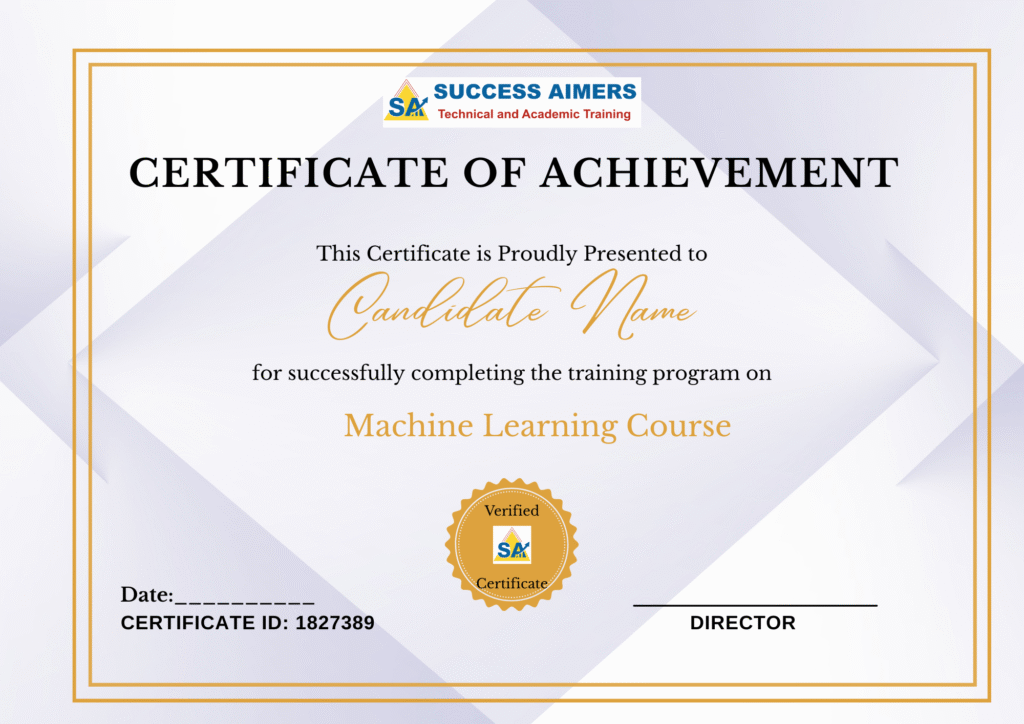
- Get your certificate upon successful completion of the course.
- Certificates for each course
- MLFlow
- MLOps
- Machine Learning
- Tensorflow
- Azure DevOps
- Keras
- AWS ECR
- Azure Container Registry
- Scikit Learn
- AWS Sagemaker
- Azure Machine Learning
- Kubernetes
- Kubeflow
- Docker

45% - 100%







Designed to provide guidance on current interview practices, personality development, soft skills enhancement, and HR-related questions

Receive expert assistance from our placement team to craft your resume and optimize your Job Profile. Learn effective strategies to capture the attention of HR professionals and maximize your chances of getting shortlisted.

Engage in mock interview sessions led by our industry experts to receive continuous, detailed feedback along with a customized improvement plan. Our dedicated support will help refine your skills until your desired job in the industry.

Join interactive sessions with industry professionals to understand the key skills companies seek. Practice solving interview question worksheets designed to improve your readiness and boost your chances of success in interviews

Build meaningful relationships with key decision-makers and open doors to exciting job prospects in Product and Service based partner

Your path to job placement starts immediately after you finish the course with guaranteed interview calls
Why should you choose to pursue a ML Engineer course with Success Aimers?
Success Aimers teaching strategy follow a methodology where in we believe in realtime job scenarios that covers industry use-cases & this will help in building the carrer in the field of Machine Learning & also delivers training with help of leading industry experts that helps students to confidently answers questions confidently & excel projects as well while working in a real-world
What is the time frame to become competent as a ML Engineer?
To become a successful ML Engineer required 1-2 years of consistent learning with dedicated 3-4 hours on daily basis.
But with Success Aimers with the help of leading industry experts & specialized trainers you able to achieve that degree of mastery in 6 months or one year or so and it’s because our curriculum & labs we had formed with hands-on projects.
Will skipping a session prevent me from completing the course?
Missing a live session doesn’t impact your training because we have the live recorded session that’s students can refer later.
What industries lead in Machine Learning implementation?
Manufacturing
Financial Services
Healthcare
E-commerce
Telecommunications
BFSI (Banking, Finance & Insurance)
“Travel Industry
Does Success Aimers offer corporate training solutions?
At Success Aimers, we have tied up with 500 + Corporate Partners to support their talent development through online training. Our corporate training programme delivers training based on industry use-cases & focused on ever-evolving tech space.
How is the Success Aimers Machine Learning (ML) Certification Course reviewed by learners?
Our ML Engineer Course features a well-designed curriculum frameworks focused on delivering training based on industry needs & aligned on ever-changing evolving needs of today’s workforce due to ML.
Also our training curriculum has been reviewed by alumi & praises the thoroguh content & real along practical use-cases that we covered during the training. Our program helps working professionals to upgrade their skills & help them grow further in their roles…
Can I attend a demo session before I enroll?
Yes, we offer one-to-one discussion before the training and also schedule one demo session to have a gist of trainer teaching style & also the students have questions around training programme placements & job growth after training completion.
What batch size do you consider for the course?
On an average we keep 5-10 students in a batch to have a interactive session & this way trainer can focus on each individual instead of having a large group
Do you offer learning content as part of the program?
Students are provided with training content wherein the trainer share the Code Snippets, PPT Materials along with recordings of all the batches
Data Science Course Training in Gurgaon Deep Learning and Artificial Intelligence (AI) represent the future...

Deep Learning and Artificial Intelligence Training Course in Gurgaon Deep Learning and Artificial Intelligence (AI)...