Azure Data Engineering Certification Training in Gurgaon
Master Azure Cloud and get prepared for Azure official certifications with our role based courses tailored to your specific needs
- Enroll for Cloud Architecture, Developer, Operations, DevOps, AI / ML, Networking and Security Certifications
- Experience blended learning through interactive offline and online sessions.
- Job Assured Course

- Course Duration - 2 months
- Get Trained from Industry Experts
Train using realtime course materials using online portals & trainer experience to get a personalized teaching experience.
Active interaction in sessions guided by leading professionals from the industry
Gain professionals insights through leading industry experts across domains
Enhance your career with 42+ in-demand skills and 20+ services
Azure Data Engineer Certification Overview
This Azure live-learning courses cover deep into designing, developing, deploying, and managing scalable solutions and infrastructure across AZURE platforms, equipping you for success in today’s fast-evolving technology landscape
- Benefit from ongoing access to all self-paced videos and archived session recordings
- Success Aimers supports you in gaining visibility among leading employers
- Get prepared for 10+ Azure official certifications with our role based courses tailored to your specific needs
- Engage with real-world capstone projects
- Engage in live virtual classes led by industry experts, complemented by hands-on projects
- Learn 42+ In-Demand Skills & 20+ Services
- Job interview rehearsal sessions
Basic, high-level knowledge of Azure Cloud services and terminology. Ideal starting point for Azure Certification for those with no prior IT/cloud experience transitioning to cloud careers, or business professionals seeking foundational cloud literacy
Familiarity with artificial intelligence (AI), machine learning (ML), and generative AI fundamentals and real-world applications

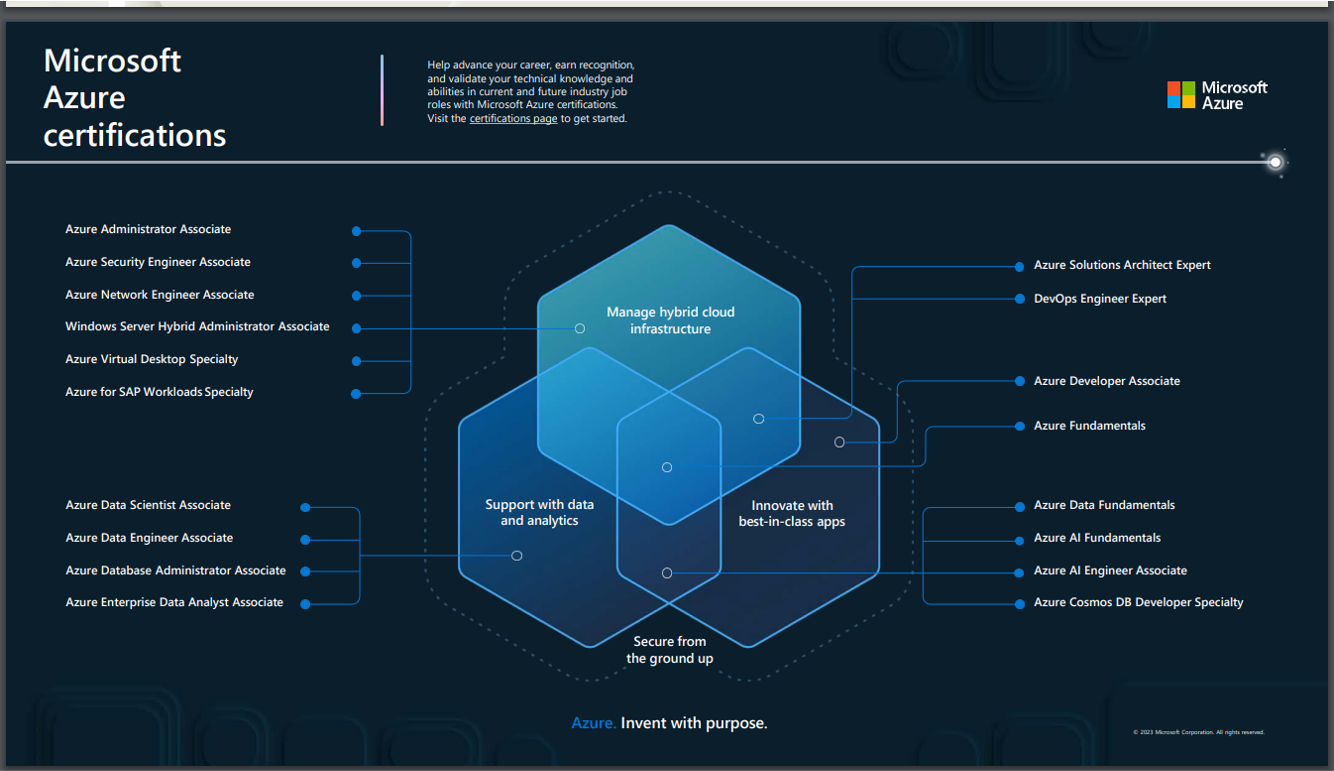
What is Azure Cloud Fundamentals ?
Azure Certified Cloud Fundamentals are essential for driving AI innovation in software development and testing. They manage the full deployment lifecycle—deploying apps, building and maintaining pipelines for web applications and K8s workflows, and automating development and testing processes. By streamlining workflows and resolving challenges in webapp deployment on cloud, and maintenance, they help organizations deliver reliable, high-performance applications faster and more efficiently.
The role of Azure Cloud Fundamentals?
Azure Certified Cloud Engineers in software development and testing oversees the end-to-end lifecycle of web applications, from development to deployment and system performance optimization. Key responsibilities include:
Exploring Emerging Technologies: Leveraging Cloud technologies, Cloud networking, and security techniques to enhance efficiency and streamline deployment workflows.
Scalable Data, AI & WebApps Development: Designing and implementing web applications that address critical business needs.
Seamless Deployment: Coordinating web deployment with infrastructure management for smooth delivery.
Workflow Optimization: Creating, analyzing, and refining automation scripts and deployment workflows to maximize productivity.
For professionals aspiring to excel in this field, the Success Aimers Azure Certified Cloud Engineers Course provides hands-on training to master these skills. The program equips you to confidently manage deployment lifecycles, deployment pipelines, automation, and deployment processes, positioning you as a high-impact Azure Certified Cloud Engineers engineer in software development and testing.”**
Who should take this Azure Certified Cloud Engineers course?
The AWS Certified Cloud Engineer Course is tailored for professionals aiming to accelerate their careers in Cloud, data, and technology-driven sectors. It is particularly valuable for roles including:
Cloud Team Leaders
Software and DevOps Developers
Cloud Engineers and IT Managers
Cloud & Infrastructure Engineers
Cloud Researchers and Application Engineers
This program equips participants with the skills to lead DevOps & infrastructure initiatives, implement advanced deployment workflows, and drive innovation in software development and testing.
What are the prerequisites of Azure Certified Cloud Engineer Course?
Prerequisites for the Azure Certified Cloud Engineer Certification Course”
To ensure a seamless learning experience, candidates are expected to have:
Educational Background: An undergraduate degree or high school diploma in a relevant field.
Technical Foundation: Knowledge of IT, software development, or data science fundamentals.
Programming Skills: Basic proficiency in languages such as Python or JavaScript.
Cloud Familiarity: Experience with cloud platforms like AWS or Microsoft Azure.
Meeting these prerequisites enables learners to effectively grasp advanced Cloud concepts, including DevOps tool, pipeline workflows, Webapp deployment, and automation throughout the course.
Which jobs can I get after a Azure Certified Data Engineer Certification Course?
- Azure Certified Cloud Engineer
- SRE Reliability Engineer
- Cloud Solutions Release Manager
- Infrastructure/Cloud Automation Engineer
- Cloud Engineer / Cloud Architect
- Cloud Infrastructure Engineer
- Cloud Deployment Engineer
| Training Options | Weekdays (Mon-Fri) | Weekends (Sat-Sun) | Fast Track |
|---|---|---|---|
| Duration of Course | 2 months | 3 months | 15 days |
| Hours / day | 1-2 hours | 2-3 hours | 5 hours |
| Mode of Training | Offline / Online | Offline / Online | Offline / Online |
Azure Data Engineering Course Overview
This Azure Cloud Certification training enhances your career after choosing the relevant certification path based on the roles. You can practice with hands-on labs and capstone projects and gain proficiency with Azure tools. After completion of the course, you can leverage Job assistance services and enhance career prospects.
Data Engineering
Microsoft Azure Data Engineer Associate Course (DP-203)
Introduction to Azure Cloud Computing
- Introduction to Azure Cloud
- Azure Subscription
- Azure Services Overview
- Azure Portal
- Managed and Unmanaged Data Service
- Application Resources
- Application Subscription Management
- Enterprise Divisions
- Azure Resource Groups
- Role Based Access Control (RBAC)
- Role Inheritance
Introduction to Data Engineering
- Data Expanding
- Data Lifecycle
- Data Engineering related Services on Azure
Azure Data Factory – Cloud Version of SSIS
Data Factory on Azure Ecosystem
SSIS Vs Data Factory
Data Factory Considerations
Creating Azure Data Factory
Azure Data Factory Components
Azure Data Factory (ADF) Pipelines
Azure Data Factory Activities
- HDInsight Activity
- Databricks Activity
- Copy Activity
- Validation Activity
- Web Activity
- Get Metadata Activity
ADF Data Flows
ADF Dataset Object
ADF Linked Service
ADF Components
Integration Runtimes
ADF Triggers
- Schedule Trigger
- Tumbling Window Trigger
- Event-based Trigger
Data Ingestion from Azure BLOB Module
Naming Standards
Control Flow Activities – Validation, Get Metadata, If Condition, Delete
Data Ingestion from HTTP
ADF Transformations
- Source Transformation
- Filter Transformation
- Select Transformation
- Pivot Transformation
- Lookup Transformation
- Join & Aggregate Transformation
- Derived Column Transformation
- Sink Transformation
Metadata Driven Pipeline
Event Driven Ingestion Pipeline
Azure Databricks
Introduction to Databricks
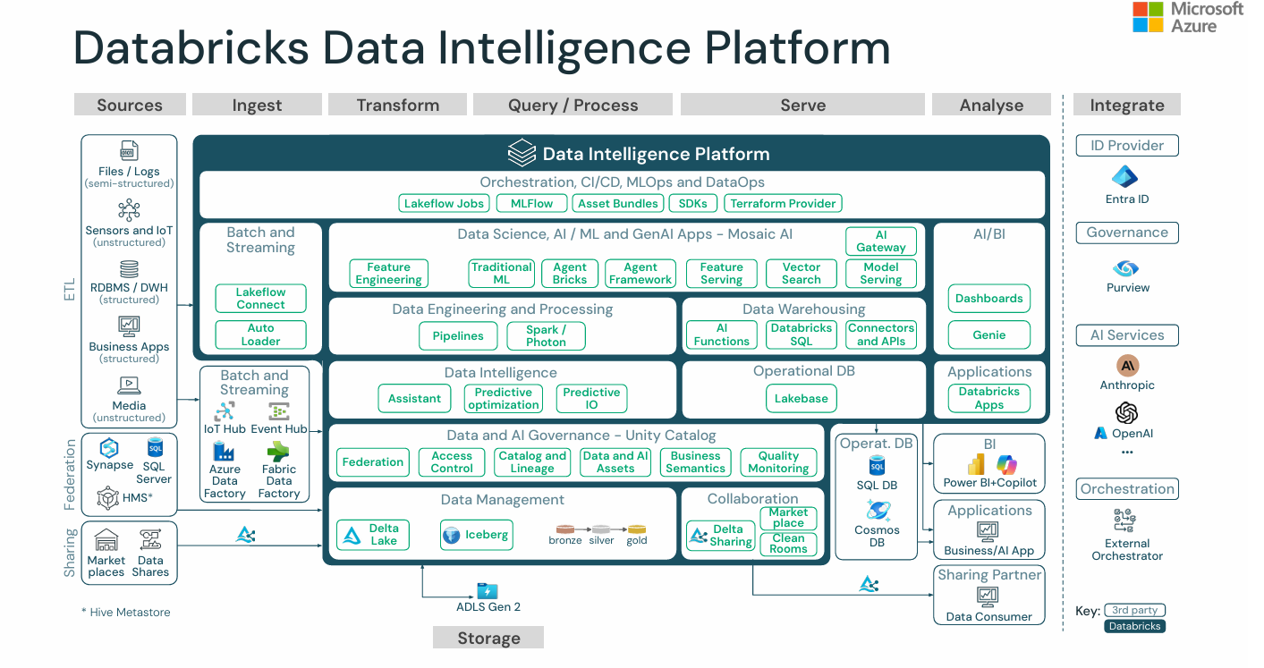
Databricks - Apache Spark based Unified Analytics Platform, optimized for the Cloud
Databricks Lakehouse Platform
- Fundamentals of the Databricks Lakehouse Platform
- Persistence Volume Claim (PVC)
- Fundamentals of Delta Lake
- Fundamentals of Lakehouse Architecture
- Fundamentals of Databricks SQL
- Fundamentals of Databricks Machine Learning
- Fundamentals of the Databricks Lakehouse Platform Accreditation
- Fundamentals of Big Data
- Fundamentals of Cloud Computing
- Fundamentals of Enterprise Data Management Systems
- Fundamentals of Machine Learning
- Fundamentals of Structured Streaming
Spark Basics
- Spark Ecosystem
- Quick Reference Spark Architecture
- Introduction to Apache Spark Architecture
- Apache Spark API’s
- Starting Spark 2.0 – APIs for Datasets & DataFrames have merged
- Delta Lake Rapid Start with Python
- Delta Lake Rapid Start with Spark SQL
Databricks Features
- Infrastructure Management
- Workspace Collaboration
- Automation
- Security
Azure Databricks- Data Engineering
- Azure Databricks Cloud Architecture & System Integration Fundamentals
- Azure Databricks Cloud Architecture and System Integration Fundamentals
- Databricks on Google Cloud: Cloud Architecture & System Integration
- Configuring Workspace Access Control Lists (ACLs)
- Databricks Command Line Interface Fundamentals
- Databricks Datadog Integration
- Easy ETL with Auto Loader
- Introduction to Cloning with Delta Lake
- Introduction to Databricks Connect
- Introduction to Databricks Repos
- Introduction to Delta Live Tables
- Introduction to Multi-Task Jobs
- Lake House with Delta Lake Deep Dive
- Propagating Changes with Delta Change Data Feed
- Quick Reference: CI/CD
- Structured Streaming on Azure Databricks
- Streaming DELTA Tables
- Compliance & Optimization
Databricks Cluster Types
Databricks Workspaces
- Isolation Unit
- Workspace ID
- Locked Resources
- Organize Assets
- Access Controls
Databricks Jobs
Optimizing Apache Spark on Databricks
- Five Most Common Problems with Spark Applications
- Key Ingestion Concepts
- Optimizing with Adaptive Query Execution & Dynamic Partition Pruning
- Designing Clusters for High Performance
Azure Data Lake (ADLS Gen2)
- ADLS Gen 2 Introduction
- Data Lake Sources
- Data Warehouse vs Data Lakes
- Demo: Speech Studio
- Exam Tips: Azure AI Language Service
- Azure Data Lake Gen 1 Evolution
- Azure Data Lake Gen 2
- BLOB Storage Vs Data Lake Storage
- Data Lake Architecture
- Hierarchical Namespace
- Important Features of Data Lake Gen2
- Data Flow around Data Lake
- Azure Active Directory
- Shared Access Signature
- Access Control List (ACL)
- Data Lake Optimization Techniques
Azure HDInsight’s
- Azure Hadoop
- Need to Distributed Computing
- Hadoop Architecture
- HDInsight High Level Architecture
- Demo: Azure AI Search
- What is Azure HDInsight?
- Important Aspects of HDInsight
- Ambari inside HDInsight
Azure Monitor Service
- Types of Monitoring
- Azure Monitor Service
Azure SQL Database
- Introduction
- Why SQL Server in Azure?
- Azure IaaS Vs PaaS Database offerings?
- Responsibility, Benefits, Limitations Comparison
- Azure Database Deployment Options
- SQL Server on Virtual Machine
- Azure SQL Database Service Tiers
- vCore-based Vs DTU-based Model
- Azure SQL Database Options
- Azure SQL DB Vs. Azure SQL DW
- Azure Database Elastic Pool
- Azure Database Managed Instance
- Migration Options
- Service Tiers of Managed Instance
- Management Options
- Security - Networking Security
- Access Management
- Threat Protection
- Information Protection
- Security Management
- Managed Instance Advance Security
Azure SQL Datawarehouse – Azure Synapse Analytics Service
What is Azure Synapse Analytics service
- Why Data Warehousing in Cloud
- Azure Synapse Service – a Game Changer
- Traditional vs Modern vs Synapse DW Architecture
- Modern vs Synapse DW Architecture
- Synapse Studio – Unified Experience
- Provision, Scale, Pause, Firewall settings
Azure Data Warehouse Architecture & Data Migration Techniques, PolyBase
- MPP, Table types, Partitioning, etc
- Data types and Table types (Colum store, Heap, Clustered B-tree index)
- MPP or Massive Parallel Processing
- Storage & Data Distribution (Hash, Round-robin, Replicate)
- Partitioning and Distribution key
- Applications in Dimensional modeling
- Table Analysis before Migration to Cloud
- Best practices for Data Load in MPP Architecture
- Different loading methods
- Why PolyBase is preferred
- SSIS vs PolyBase loading methods
- PolyBase process in detail
- Loading with different techniques
Provision, Configure and Scale Synapse Service
Security layers
Serverless SQL Pool
- Serverless SQL Pool Architecture
- Distributed Query Engine
- Features & Use Cases
- Cost Control – Cost Management
- Connecting to Azure Data Studio
- Query using T-SQL Support
- Synapse Link
- Query Spark Tables
- Pay-per-query pricing Model
- Database Objects – External Tables & Views (Create External Table (CET) & Create External Table AS Select (CETAS))
Synapse Pipelines
- Overview
- Components
- Creating Pipelines
- Variables & Parameters
- Dynamic Pipelines
- Pipeline Dependencies
- Creating Triggers
- Azure Data Factory Vs Synapse Pipelines
Spark Pool
- Spark Pool
- Create Spark Tool
- Notebooks Overview
- Delta Lake
- Pre-loaded Libraries
- Integration with Serverless SQL Pool
- Create Spark Table
- Create Synapse Pipeline
Dedicated SQL Pool
- Overview
- Create Dedicated SQL Pool
- External Tables
- Copy Command
- Connecting from Azure Data Studio
- Connecting from Power BI
Databricks Jobs
Optimizing Apache Spark on Databricks
- Five Most Common Problems with Spark Applications
- Key Ingestion Concepts
- Optimizing with Adaptive Query Execution & Dynamic Partition Pruning
- Designing Clusters for High Performance
Configuration & Common tasks
Backup and Restore
Pricing, Managing Workloads, etc.
Monitoring, Resource Health, Support, etc.
- Azure Pricing & Cost Management
Factors That Can Affect Costs in Azure
Synapse – Power BI Integration
- Power BI Integration Overview
- Connecting from Power BI Desktop
- Publishing to Power BI Workspace
- Power BI Integration with Synapse Studio
- Create Reports
Azure Streaming Analytics
Live Event Processing
Azure Options for Live Data Processing
- HDInsight with Spark Streaming
- HDInsight with Storm
- Apache Spark in Azure Databricks
- Azure Functions
- Web Jobs
- Azure Stream Analytics
Azure Stream Analytics Data Flow
Azure Stream Analytics Windowing
- Tumbling Window
- Hopping Window
- Sliding Window
- Session Window
Azure Stream Analytics Data Inputs
Azure Stream Analytics Data Output
Late Event Handling using Watermark
Stream Analytics – Optimization
Azure NoSQL
What is NoSQL
NoSQL Use Cases
SQL Vs NoSQL
4 Types of NoSQL Databases
- Document store
- Graph store
- Key-Value (KV) store
- Wide-column store
Multi-model
- Orient DB: Combines a graph model with a document model.
- Arango DB: Use Key/Value, document, and graph models.
- Virtuoso: Combines relational, graph, and document models.
- Wide-column store
Cosmos DB – Azure NoSQL offering
Azure Cosmos DB: Azure NoSQL Database
Challenges with globally distributed Databases
Why Cosmos DB?
Cosmos API’s
- SQL (Core) API
- MongoDB API
- Cosmos DB Table API
- Cosmos DB Cassandra API
- Cosmos DB Gremlin API
Time to Live (TTL)
Why Cosmos DB?
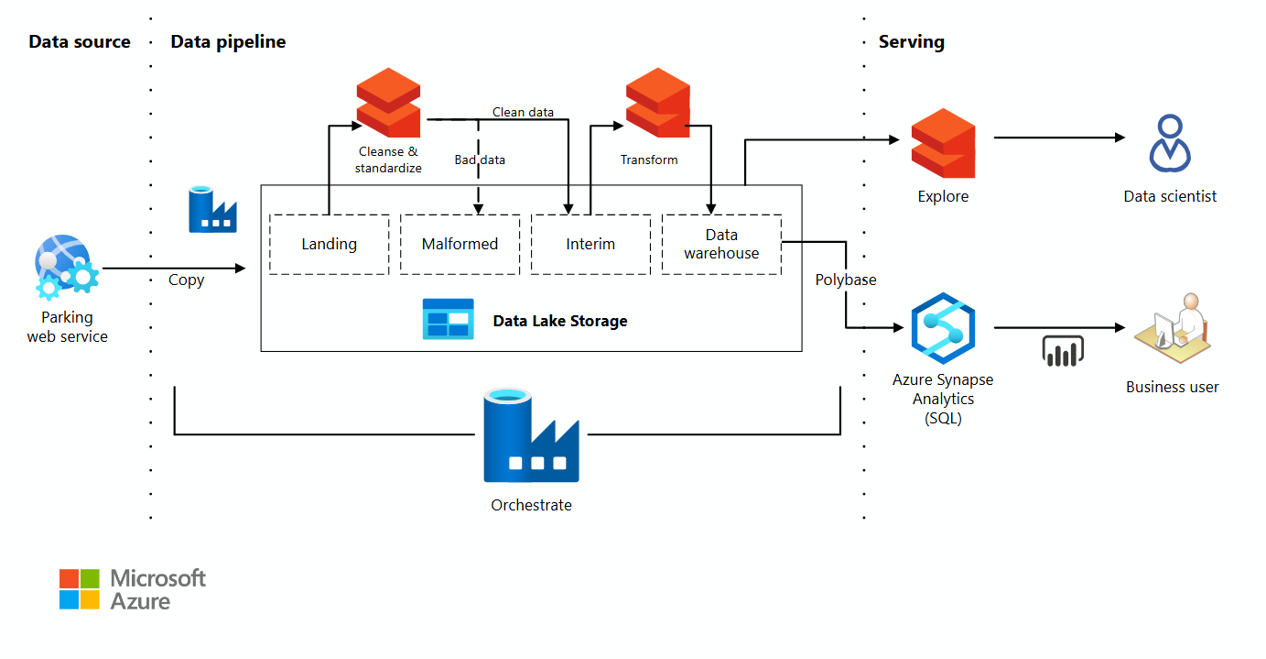
Develop a Data Pipeline using Azure Databricks to ingest data from hybrid sources (API, HTTP interfaces, databases & others) into DW’s & DeltaLake)
Project Description : Data will be hydrated from various sources into the raw layer (Bronze Layer) using Azure Data Factory (ADF) connectors. Further it will be processed through silver layer/table after data standardization & cleansing process. From curated layer (silver layer) DataBricks jobs populate the target layer (gold layer) after business transformation that will derive key business insights.
Automated Ingestion Framework Pipeline (Data MESH on Azure)
The whole Data MESH pipeline will be automated through Jenkins & Terraform where in it deploys the Azure components like Azure BLOB Storage, Functions, Logic Apps into Azure before triggering the data flow through the pipeline. Data will be extracted from the source like contact centers & others & this whole pipeline is realtime pipeline that triggers whenever data arrives from the source into Kafka using Kafka source and sink connecters that triggers the deployment process.
Hours of content
Live Sessions
Software Tools




After completion of this training program you will be able to launch your carrer in the world of AI being certified as Microsoft Certified Azure Data Engineer Associate – Exam DP-203 Certification Course.
With the Microsoft Certified Azure Data Engineer Associate – Exam DP-203 Certification Course in-hand you can boost your profile on Linked, Meta, Twitter & other platform to boost your visibility
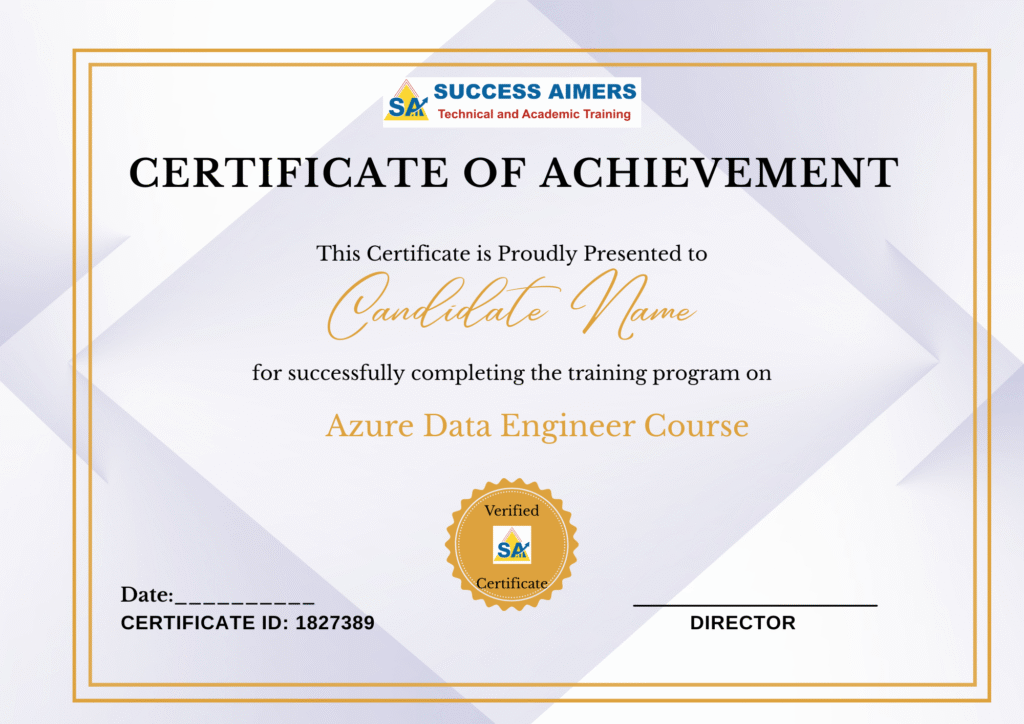
- Get your certificate upon successful completion of the course.
- Certificates for each course
- Azure BLOB Storage
- AWS Polly
- Azure Databricks
- Azure SQL Server
- Azure Functions
- Azure App Services
- Azure Logic Apps
- Azure Document DB
- Azure Fabric
- Azure Kubernetes Service (AKS)
- Azure Container Registry (ACR)
- API Management
- Azure Search
- Azure Moniter

45% - 100%







Designed to provide guidance on current interview practices, personality development, soft skills enhancement, and HR-related questions

Receive expert assistance from our placement team to craft your resume and optimize your Job Profile. Learn effective strategies to capture the attention of HR professionals and maximize your chances of getting shortlisted.

Engage in mock interview sessions led by our industry experts to receive continuous, detailed feedback along with a customized improvement plan. Our dedicated support will help refine your skills until your desired job in the industry.

Join interactive sessions with industry professionals to understand the key skills companies seek. Practice solving interview question worksheets designed to improve your readiness and boost your chances of success in interviews

Build meaningful relationships with key decision-makers and open doors to exciting job prospects in Product and Service based partner

Your path to job placement starts immediately after you finish the course with guaranteed interview calls
Why should you choose to pursue a Microsoft Certified Azure Data Engineer Associate – Exam DP-203 Certification Course with Success Aimers?
Success Aimers teaching strategy follow a methodology where in we believe in realtime job scenarios that covers industry use-cases & this will help in building the carrer in the field of Azure & also delivers training with help of leading industry experts that helps students to confidently answers questions confidently & excel projects as well while working in a real-world
What is the time frame to become competent as a Azure Engineer?
To become a successful AWS Engineer required 1-2 years of consistent learning with dedicated 3-4 hours on daily basis.
But with Success Aimers with the help of leading industry experts & specialized trainers you able to achieve that degree of mastery in 6 months or one year or so and it’s because our curriculum & labs we had formed with hands-on projects.
Will skipping a session prevent me from completing the course?
Missing a live session doesn’t impact your training because we have the live recorded session that’s students can refer later.
What industries lead in Azure implementation?
- Manufacturing
- Financial Services
- Healthcare
- E-commerce
- Telecommunications
- BFSI (Banking, Finance & Insurance)
- “Travel Industry
Does Success Aimers offer corporate training solutions?
At Success Aimers, we have tied up with 500 + Corporate Partners to support their talent development through online training. Our corporate training programme delivers training based on industry use-cases & focused on ever-evolving tech space.
How is the Success Aimers Microsoft Certified Azure Data Engineer Associate – Exam DP-203 Certification Course reviewed by learners?
Our Azure Cloud Engineer Course features a well-designed curriculum frameworks focused on delivering training based on industry needs & aligned on ever-changing evolving needs of today’s workforce due to Cloud Computing (AWS)
Also our training curriculum has been reviewed by alumi & praises the thorough content & real along practical use-cases that we covered during the training. Our program helps working professionals to upgrade their skills & help them grow further in their roles…
Can I attend a demo session before I enroll?
Yes, we offer one-to-one discussion before the training and also schedule one demo session to have a gist of trainer teaching style & also the students have questions around training programme placements & job growth after training completion.
What batch size do you consider for the course?
On an average we keep 5-10 students in a batch to have a interactive session & this way trainer can focus on each individual instead of having a large group
Do you offer learning content as part of the program?
Students are provided with training content wherein the trainer share the Code Snippets, PPT Materials along with recordings of all the batches
Azure AI Certification Training in Gurgaon Master Azure Cloud and get prepared for Azure official...
Azure Cloud Certification Training Program in Gurgaon Master Azure Cloud and get prepared for Azure...
Azure Developer Certification Training in Gurgaon Master Azure Cloud and get prepared for Azure official...
Azure DevOps Certification Training in Gurgaon Master Azure Cloud and get prepared for Azure official...
Azure Fundamentals Certification Training in Gurgaon Master Azure Cloud and get prepared for Azure official...
Azure Solution Architect Certification Training in Gurgaon Master Azure Cloud and get prepared for Azure...