AWS Machine Learning Certification Training in Gurgaon
- Enroll for Cloud Architecture, Developer, Operations, DevOps, AI / ML, Networking and Security Certifications
- Experience blended learning through interactive offline and online sessions.
- Job Assured Course


- Course Duration - 3 months
- Get Trained from Industry Experts
Train using realtime course materials using online portals & trainer experience to get a personalized teaching experience.
Active interaction in sessions guided by leading professionals from the industry
Gain professionals insights through leading industry experts across domains
Enhance your career with 42+ in-demand skills and 20+ services
AWS Machine Learning Certification Overview
This AWS live-learning courses cover deep into designing, developing, deploying, and managing scalable solutions and infrastructure across AWS platforms, equipping you for success in today’s fast-evolving technology landscape
- Benefit from ongoing access to all self-paced videos and archived session recordings
- Success Aimers supports you in gaining visibility among leading employers
- Get prepared for 10+ AWS official certifications with our role based courses tailored to your specific needs
- Engage with real-world capstone projects
- Engage in live virtual classes led by industry experts, complemented by hands-on projects
- Learn 42+ In-Demand Skills & 20+ Services
- Job interview rehearsal sessions
Research, develop, and design AI systems to automate predictive models, while creating machine learning systems, models, and frameworks

Build and maintain AI/ML platforms and infrastructure. Design, implement, and operationally support the deployment infrastructure for AI/ML models

Create, test, and refine text prompts to maximize the performance of AI language models

Develop and deploy AI/ML models to address business challenges. Train, fine-tune models, and assess their performance


What is AWS Certified ML Engineer?
AWS Certified Engineers are essential for driving cloud innovation in software development and testing. They manage the full deployment cycle, building and maintaining DevOps pipelines for Application deployment and workflows, and also automating deployment and testing processes. By automating workflows and resolving challenges in deployment, and maintenance, they help organizations deliver reliable, high-performance & faster and more efficiently.
The role of AWS Certified ML Engineer?
AWS Certified Cloud Engineers in software development and testing oversees the end-to-end lifecycle of web applications, from development to deployment and system performance optimization. Key responsibilities include:
Exploring Emerging Technologies: Leveraging Cloud technologies, Cloud netwtorking, and security techniques to enhance efficiency and streamline deployment workflows.
Scalable AI Development: Designing and implementing web applications that address critical business needs.
Seamless Deployment: Coordinating web deployment with infrastructure management for smooth delivery.
Workflow Optimization: Creating, analyzing, and refining automation scripts and deployment workflows to maximize productivity.
For professionals aspiring to excel in this field, the Success Aimers AWS Certified Cloud Engineers Course provides hands-on training to master these skills. The program equips you to confidently manage deployment lifecycles, deployment pipelines, automation, and deployment processes, positioning you as a high-impact AWS Certified Cloud Engineers engineer in software development and testing.”**
Who should take this AWS Certified ML Engineers course?
The AWS Certified Cloud Engineer Course is tailored for professionals aiming to accelerate their careers in Cloud, data, and technology-driven sectors. It is particularly valuable for roles including:
Cloud Team Leaders
Software and DevOps Developers
Cloud Engineers and IT Managers
Cloud & Infrastructure Engineers
Cloud Researchers and Application Engineers
This program equips participants with the skills to lead DevOps & infrastructure initiatives, implement advanced deployment workflows, and drive innovation in software development and testing.
What are the prerequisites of AWS Certified ML Engineer Course?
Prerequisites for the AWS Certified Cloud Engineer Certification Course”
To ensure a seamless learning experience, candidates are expected to have:
Educational Background: An undergraduate degree or high school diploma in a relevant field.
Technical Foundation: Knowledge of IT, software development, or data science fundamentals.
Programming Skills: Basic proficiency in languages such as Python or JavaScript.
Cloud Familiarity: Experience with cloud platforms like AWS or Microsoft Azure.
Meeting these prerequisites enables learners to effectively grasp advanced Cloud concepts, including DevOps tool, pipeline workflows, Webapp deployment, and automation throughout the course.
Which jobs can I get after a AWS Certified ML Engineer Certification Course?
- AWS Certified Cloud Engineer
- SRE Reliability Engineer
- Cloud Solutions Release Manager
- Infrastructure/Cloud Automation Engineer
- Cloud Engineer / Cloud Architect
- Cloud Infrastructure Engineer
- Cloud Deployment Engineer
| Training Options | Weekdays (Mon-Fri) | Weekends (Sat-Sun) | Fast Track |
|---|---|---|---|
| Duration of Course | 2 months | 3 months | 15 days |
| Hours / day | 1-2 hours | 2-3 hours | 5 hours |
| Mode of Training | Offline / Online | Offline / Online | Offline / Online |
AWS Certified Machine Learning Engineer Course Overview
This AWS Cloud Certification training enhances your career after chosing the relevant certification path based on the roles. You can practice with hands-on labs and capstone projects and gain proficiency with AWS tools. After completion of the course, you can leverage Job assistance services and enhance career prospects.
AI / ML
AWS Machine Learning Engineer Associate Certification Course (MLA-C01)
Introduction
- Introduction
- AWS Console UI Update
- Setting Up an AWS Billing Alarm
Data Ingestion and Storage
- Intro: Data Ingestion and Storage
- Types of Data
- Properties of Data (The Three V's)
- Data Warehouses, Lakes, and Lakehouses
- Data Mesh
- ETL & ETL Pipelines and Orchestration
- Common Data Sources and Data Formats
- Amazon S3
- Amazon S3 Security - Bucket Policy
- Amazon S3 – Versioning
- Amazon S3 – Replication
- Amazon S3 - Storage Classes
- Amazon S3 - Lifecycle Rules
- Amazon S3 - Event Notifications
- Amazon S3 – Performance
- Amazon S3 – Encryption
- About DSSE-KMS
- Amazon S3 - Encryption - Hands On
- Amazon S3 - Default Encryption
- Amazon S3 - Access Points
- Amazon S3 - Object Lambda
- Amazon EBS
- Amazon EBS Elastic Volumes
- Amazon EFS
- Amazon EFS vs. Amazon EBS
- Amazon FSx
- Amazon Kinesis Data Streams
- Amazon Data Firehose
- Kinesis Tuning and Troubleshooting
- Amazon Managed Service for Apache Flink
- Kinesis Analytics Costs; RANDOM_CUT_FOREST
- Amazon MSK
- Amazon MSK – Connect
- Amazon MSK – Serverless
- Amazon Kinesis vs. Amazon MSK
Data Transformation, Integrity, and Feature Engineering
- Intro: Data Transformation, Integrity, and Feature Engineering
- Elastic MapReduce (EMR) and Hadoop Overview
- EMR Serverless
- Apache Spark on EMR
- Feature Engineering and the Curse of Dimensionality
- Lab: Preparing Data for TF-IDF with Spark and EMR Studio, Part 1
- Lab: Preparing Data for TF-IDF with Spark and EMR Studio, Part 2
- Imputing Missing Data
- Dealing with Unbalanced Data
- Handling Outliers
- Binning, Transforming, Encoding, Scaling, and Shuffling
- UPDATE: SageMaker is now "SageMaker AI"
- SageMaker AI Overview
- SageMaker AI Domains
- Data Processing, Training, and Deployment with SageMaker AI
- Amazon SageMaker Ground Truth and Label Generation
- Amazon Mechanical Turk
- SageMaker Data Wrangler
- Demo: SageMaker Studio, Canvas, and Data Wrangler
- SageMaker Model Monitor and SageMaker Clarify
- Partial Dependence Plots (PDPs), Shapley values, and SHAP
- SageMaker Feature Store
- SageMaker Canvas
- AWS Glue
- AWS Glue Studio
- AWS Glue Data Quality
- AWS Glue DataBrew
- Demo: Glue DataBrew
- Handling PII in DataBrew Transformations
- Intro to Amazon Athena
- Athena and Glue
- Athena and CREATE TABLE AS SELECT
- Athena Performance
- Athena ACID Transactions
- Athena Fine-Grained Access
AWS Managed AI Services
- Intro: AWS Managed AI Services
- Why AWS Managed Services?
- Amazon Comprehend
- Amazon Comprehend Custom Models
- Amazon Comprehend - Hands On
- Amazon Translate
- Amazon Transcribe
- Amazon Polly
- Amazon Rekognition
- Amazon Lex
- Amazon Personalize
- Amazon Textract
- Amazon Kendra
- Amazon Augmented AI
- Amazon's Hardware for AI
- Amazon Lookout
- Amazon Fraud Detector
- Amazon Q Business
- Amazon Q Apps
- Amazon Q Developer
Sagemaker Built-In Algorithms
- Intro: SageMaker Built-In Algorithms
- Introducing Amazon SageMaker
- SageMaker Input Modes
- Linear Learner in SageMaker
- XGBoost in SageMaker
- LightGBM in SageMaker
- Seq2Seq in SageMaker
- DeepAR in SageMaker
- BlazingText in SageMaker
- Object2Vec in SageMaker
- Object Detection in SageMaker
- Image Classification in SageMaker
- Semantic Segmentation in SageMaker
- Random Cut Forest in SageMaker
- Neural Topic Model in SageMaker
- Latent Dirichlet Allocation (LDA) in SageMaker
- K-Nearest-Neighbors (KNN) in SageMaker
- K-Means Clustering in SageMaker
- Principal Component Analysis (PCA) in SageMaker
- Factorization Machines in SageMaker
- IP Insights in SageMaker
Model Training, Tuning and Evaluation
- Intro: Model Training, Tuning, and Evaluation
- Introduction to Deep Learning
- Activation Functions
- Convolutional Neural Networks
- Recurrent Neural Networks
- Tuning Neural Networks
- Regularization Techniques for Neural Networks (Dropout, Early Stopping)
- L1 and L2 Regularization
- The Vanishing Gradient Problem
- The Confusion Matrix
- Precision, Recall, F1, AUC, and more
- RMSE, R-squared, MAE
- Ensemble Methods: Bagging and Boosting
- Automatic Model Tuning (AMT) in SageMaker
- Hyperparameter Tuning in AMT
- SageMaker Autopilot / AutoML
- SageMaker Studio, SageMaker Experiments
- SageMaker Debugger
- SageMaker Model Registry
- Analyzing Training Jobs with Tensor Board
- SageMaker Training at Large Scale: Training Compiler, Warm Pools
- SageMaker Checkpointing, Cluster Health Checks, Automatic Restarts
- SageMaker Distributed Training Libraries and Distributed Data Parallelism
- SageMaker Model Parallelism Library
- Elastic Fabric Adapter (EFA) and MiCS
Generative AI Model Fundamentals
- Intro: Generative AI Model Fundamentals
- The Transformer Architecture
- Self-Attention and Attention-Based Neural Networks
- Applications of Transformers
- Generative Pre-Trained Transformers: How they Work, Part 1
- Generative Pre-Trained Transformers: How they Work, Part 2
- LLM Key Terms and Controls (tokens, embeddings, temperature, etc.)
- Fine-Tuning and Transfer Learning with Transformers
- Lab: Tokenization and Positional Encoding with SageMaker Notebooks
- Lab: Multi-Headed, Masked Self-Attention in SageMaker
- Lab: Using GPT within a SageMaker Notebook
- AWS Foundation Models and SageMaker JumpStart with Generative AI
- Lab: Using Amazon SageMaker JumpStart with Hugging face
Building Generative AI Applications with Bedrock
- Intro: Building Generative AI Applications with Bedrock
- Building Generative AI with Amazon Bedrock and Foundation Models
- A note on Bedrock model access
- Lab: Chat, Text, and Image Foundation Models in the Bedrock Playground
- Fine-Tuning Custom Models and Continuous Pre-Training with Bedrock
- Retrieval-Augmented Generation (RAG) Fundamentals with Bedrock
- Vector Stores and Embeddings with Amazon Bedrock Knowledge Bases
- Implementing RAG with Amazon Bedrock Knowledge Bases
- Lab: Building and Querying a RAG System with Amazon Bedrock Knowledge Bases
- Addendum: New chunking strategies in Bedrock
- Content Filtering with Amazon Bedrock Guardrails
- Lab: Building and Testing Guardrails with Amazon Bedrock
- Building LLM Agents / Agentic AI with Amazon Bedrock Agents
- Lab: Build a Bedrock Agent with Action Groups, Knowledge Bases, and Guardrails
- Other Amazon Bedrock Features (Model Evaluation, Bedrock Studio, Watermarks)
Machine Learning Operations (MLOps) with AWS
- Intro: MLOps
- Deployment Guardrails and Shadow Tests
- SageMaker's Inner Details and Production Variants
- SageMaker On the Edge: SageMaker Neo and IoT Greengrass
- SageMaker Resource Management: Instance Types and Spot Training
- SageMaker Resource Management: Automatic Scaling
- SageMaker: Deploying Models for Inference
- SageMaker Serverless Inference and Inference Recommender
- SageMaker Inference Pipelines
- SageMaker Model Monitor
- Model Monitor Data Capture
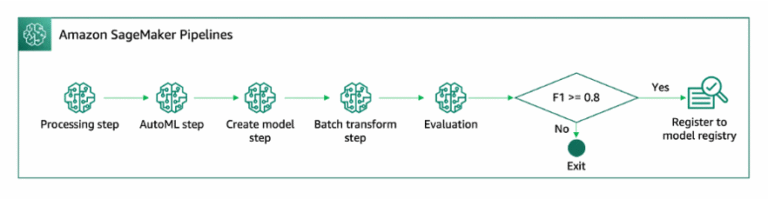
- MLOps with SageMaker, Kubernetes, SageMaker Projects, and SageMaker Pipelines
- What is Docker?
- Amazon ECS
- Amazon ECS - Create Cluster - Hands On
- Amazon ECS - Create Service - Hands On
- Amazon ECR
- Amazon EKS
- AWS Batch
- AWS CloudFormation
- AWS CDK
- AWS CodeDeploy
- AWS CodeBuild
- AWS CodePipeline
- Git Review: Architecture and Commands
- Gitflow, GitHub Flow
- Amazon EventBridge
- AWS Step Functions
- AWS Step Functions: State Machines and States
- Amazon Managed Workflows for Apache Airflow (MWAA)
- AWS Lake Formation
- Lake Formation Data Filters
Security, Identity, and Compliance
- Intro: Security, Identity, and Compliance
- Principle of Least Privilege
- Data Masking and Anonymization
- SageMaker Security: Encryption at Rest and in Transit
- SageMaker Security: VPC's, IAM, Logging and Monitoring
- IAM Introduction: Users, Groups, Policies
- IAM Users & Groups - Hands On
- AWS Console Simultaneous Sign-in
- IAM Policies
- IAM MFA
- IAM Roles
- Encryption 101
- AWS KMS
- Amazon Macie
- AWS Secrets Manager
- AWS WAF
- AWS Shield
- VPC, Subnets, Internet Gateway, NAT Gateway
- NACL, Security Groups, VPC Flow Logs
- VPC Peering, Endpoints, VPN, Direct Connect
- VPC Cheat Sheet & Closing Comments
- AWS PrivateLink
Management and Governance
- Intro: Management and Governance
- Amazon CloudWatch - Metrics
- Amazon CloudWatch - Logs
- Amazon CloudWatch - Logs Unified Agent
- Amazon CloudWatch - Alarms
- Amazon CloudWatch - Alarms - Hands On
- AWS X-Ray
- Overview of Amazon Quicksight
- Types of Visualizations, and When to Use Them
- Amazon CloudTrail
- AWS Config
- CloudWatch vs. CloudTrail vs. Config
- AWS Budgets
- AWS Cost Explorer
- AWS Trusted Advisor
Machine Learning Best Practices
- Intro: Machine Learning Best Practices
- Designing ML Systems with AWS: Responsible AI
- ML Design Principles and Lifecycle
- ML Business Goal Identification
- Framing the ML Problem
- Data Processing
- Model Development
- Deployment
- Monitoring
- AWS Well-Architected Machine Learning Lens
AWS Machine Learning Speciality Certification Course (MLS-C01)
Data Engineering
- Section Intro: Data Engineering
- [Important] AWS Console UI Update
- Set up an AWS Billing Alarm
- Amazon S3 – Overview
- Amazon S3 Storage Classes + Glacier
- Amazon S3 Storage + Glacier - Hands On
- Amazon S3 Lifecycle Rules (with S3 Analytics
- Amazon S3 Lifecycle Rules - Hands On)
- Amazon S3 - Bucket Policy
- Amazon S3 – Encryption
- Amazon S3 - Default Encryption
- Amazon S3 - VPC Endpoints
- Amazon FSx
- Amazon Kinesis Data Streams
- Amazon Data Firehose
- Amazon Managed Service for Apache Flink
- Lab 1.2 - Managed Service for Apache Flink (Formerly Kinesis Data Analytics)
- Kinesis Video Streams
- Kinesis ML Summary
- Glue Data Catalog & Crawlers
- Lab 1.3 - Glue Data Catalog
- Glue ETL
- Glue Data Brew
- List Item
- Lab 1.5 - Glue Data Brew
- Lab 1.6 – Athena
- AWS Data Stores in Machine Learning
- AWS Data Pipelines
- AWS Batch
- AWS DMS - Database Migration Services
- AWS Step Functions
- Full Data Engineering Pipelines
- Random things you need to know: AWS DataSync and MQTT
- Data Engineering Summary
Exploratory Data Analysis
- Section Intro: Data Analysis
- Python in Data Science and Machine Learning
- Example: Preparing Data for Machine Learning in a Jupyter Notebook.
- Types of Data
- Data Distributions
- Time Series: Trends and Seasonality
- Introduction to Amazon Athena
- Overview of Amazon Quicksight
- Types of Visualizations, and When to Use Them.
- Elastic MapReduce (EMR) and Hadoop Overview
- Apache Spark on EMR
- EMR Notebooks, Security, and Instance Types
- Feature Engineering and the Curse of Dimensionality
- Imputing Missing Data
- Dealing with Unbalanced Data
- Handling Outliers
- Binning, Transforming, Encoding, Scaling, and Shuffling
- Amazon SageMaker Ground Truth and Label Generation
- Lab: Preparing Data for TF-IDF with Spark and EMR Studio, Part 1
- Lab: Preparing Data for TF-IDF with Spark and EMR Studio, Part 2
Modelling, Part 1: General Deep Learning and Machine Learning
- Section Intro: Modelling
- Introduction to Deep Learning
- Activation Functions
- Convolutional Neural Networks
- Recurrent Neural Networks
- Modern NLP with BERT and GPT, and Transfer Learning
- Tuning Neural Networks
- Regularization Techniques for Neural Networks (Dropout, Early Stopping)
- Deep Learning on EC2 and EMR
- L1 and L2 Regularization
- Grief with Gradients: The Vanishing Gradient problem
- The Confusion Matrix
- Precision, Recall, F1, AUC, and more
- Ensemble Methods: Bagging and Boosting
Modelling, Part 2: Amazon Sagemaker
- Introducing Amazon SageMaker
- UPDATE: SageMaker is now "SageMaker AI"
- Linear Learner in SageMaker
- XGBoost in SageMaker
- Seq2Seq in SageMaker
- DeepAR in SageMaker
- BlazingText in SageMaker
- Object2Vec in SageMaker
- Object Detection in SageMaker
- Image Classification in SageMaker
- Semantic Segmentation in SageMaker
- Random Cut Forest in SageMaker
- Neural Topic Model in SageMaker
- Latent Dirichlet Allocation (LDA) in SageMaker
- K-Nearest-Neighbours (KNN) in SageMaker
- K-Means Clustering in SageMaker
- Principal Component Analysis (PCA) in SageMaker
- Factorization Machines in SageMaker
- IP Insights in SageMaker
- Reinforcement Learning in SageMaker
- Automatic Model Tuning
- Apache Spark with SageMaker
- SageMaker Studio, and SageMaker Experiments
- SageMaker Debugger
- SageMaker Autopilot / AutoML
- SageMaker Model Monitor
- Deployment Guardrails and Shadow Tests
- WARNING about SageMaker billing
- SageMaker Canvas
- Bias Measures in SageMaker Clarify
- SageMaker Training Compiler
- SageMaker Feature Store
- SageMaker ML Lineage Tracking
- SageMaker Data Wrangler
- Demo: SageMaker Studio, Canvas, and Data Wrangler
Modelling, Part 3: High-Level ML Services
- Amazon Comprehend
- Amazon Translate
- Amazon Transcribe
- Amazon Polly
- Amazon Rekognition
- Amazon Forecast
- Amazon Forecast Algorithms
- Amazon Lex
- Amazon Personalize
- Lightning round! TexTract, DeepRacer, Lookout, and Monitron
- TorchServe and AWS Neuron
- Deep Composer, Fraud Detection, CodeGuru, and Contact Lens
- Amazon Kendra and Amazon Augmented AI (A2I)
Modelling, Part 4: Wrapping up & Lab Activity
- Lab: Tuning a Convolutional Neural Network on EC2, Part 1
- Lab: Tuning a Convolutional Neural Network on EC2, Part 2
- Lab: Tuning a Convolutional Neural Network on EC2, Part 3
ML Implementation and Operations
- Section Intro: Machine Learning Implementation and Operations
- SageMaker's Inner Details and Production Variants
- SageMaker On the Edge: SageMaker Neo and IoT Greengrass
- SageMaker Security: Encryption at Rest and In Transit
- SageMaker Security: VPC's, IAM, Logging, and Monitoring
- SageMaker Resource Management: Instance Types and Spot Training
- SageMaker Resource Management: Automatic Scaling, AZ's
- SageMaker Serverless Inference and Inference Recommender
- SageMaker Inference Pipelines
- MLOps with SageMaker, Kubernetes, SageMaker Projects, and SageMaker Pipelines
- Lab: Tuning, Deploying, and Predicting with TensorFlow on SageMaker - Part 1
- Lab: Tuning, Deploying, and Predicting with TensorFlow on SageMaker - Part 2
- Lab: Tuning, Deploying, and Predicting with TensorFlow on SageMaker - Part 3
Generative AI: Transformers, GPT, Self-Attention and Foundation Models
- The Transformer Architecture
- Self-Attention and Attention-based Neural Networks in Depth
- Applications of Transformers (such as GPT-4 and ChatGPT)
- Generative Pre-Trained Transformers (GPT) in Depth: How They Work, Part 1
- Generative Pre-Trained Transformers (GPT) in Depth: How They Work, Part 2
- Fine-Tuning / Transfer Learning with GPT and Transformers
- Lab: Tokenization and Positional Encoding with SageMaker Notebooks + Hugging face
- Lab: Multi-Headed, Masked Self-Attention in Sagemaker and Hugging face
- Lab: Using GPT within a SageMaker Notebook
- AWS Foundation Models and Amazon SageMaker JumpStart with Generative AI
- Lab: Using Amazon SageMaker JumpStart to load and use GPT from Hugging Face
- Building Generative AI with Amazon Bedrock and Foundation Models
- Lab: Chat, Text, and Image Foundation Models in the Bedrock Playground
- Amazon Q Developer (formerly Codewhisperer)
- AWS Health Scribe - AI-generated clinical notes from consultation transcriptions
Deployment a microservices app through a CI/CD pipeline with Jenkins K8s & Terraform artifacts.
Project Description : Applications contain 20+ microservices that will be packaged into containers & pushed it to Container Registry (AWS ECR & Azure Container Registry) automatically through the CI/CD pipeline integrates with Terraform scripts that will snip the infrastructure at runtime & also helped the apps to be deployed into higher environments (UAT, Stage & above).
Also Terraform manages the end-to-end Infrastructure deployment life cycle using Terraform workflow and IaC templates.
Automated Ingestion Framework Pipeline (Data MESH on AWS)
The whole Data MESH pipeline will be automated through Jenkins & Terraform where in it deploys the AWS components like S3, Lambda, Step Functions, SQS & Iceberg tables into AWS before triggering the data flow through the pipeline. Data will be extracted from the source like contact centers & others & this whole pipeline is realtime pipeline that triggers whenever data arrives from the source into Kafka using Kafka source and sink connecters that triggers the deployment process.
Hours of content
Live Sessions
Software Tools















After completion of this training program you will be able to launch your carrer in the world of AI being certified as AWS Certified Machine Learning Engineer – Associate MLA-C01 & Machine Learning Specialty MLS-C01 Course.
With the AWS Certified Machine Learning Engineer – Associate MLA-C01 & Machine Learning Specialty MLS-C01 Course certification in-hand you can boost your profile on Linked, Meta, Twitter & other platform to boost your visibility
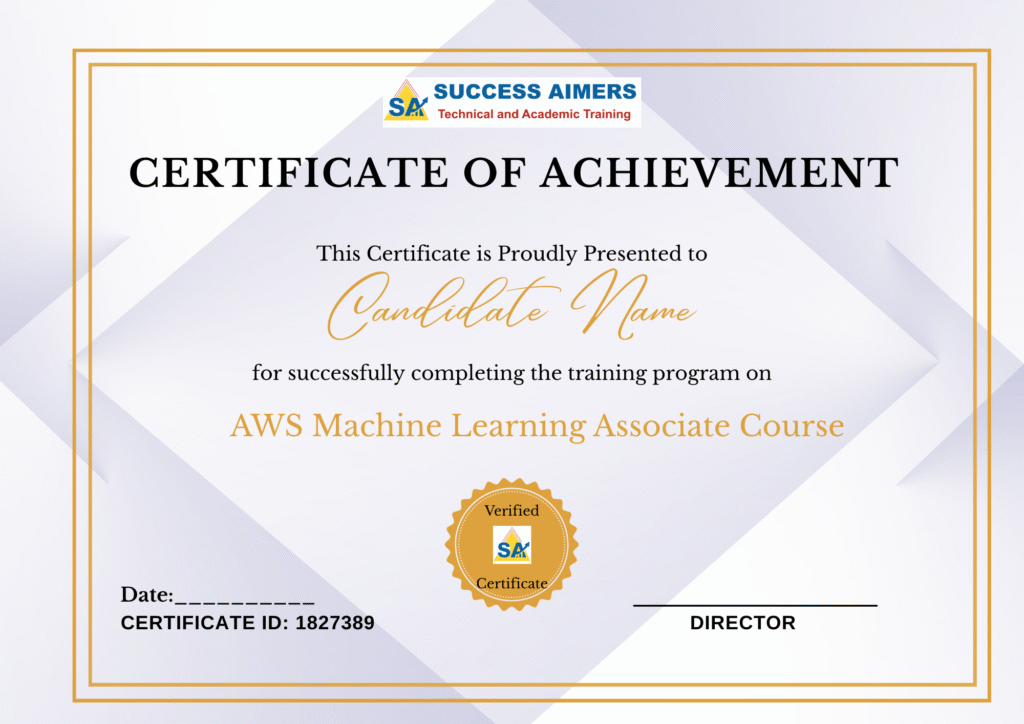
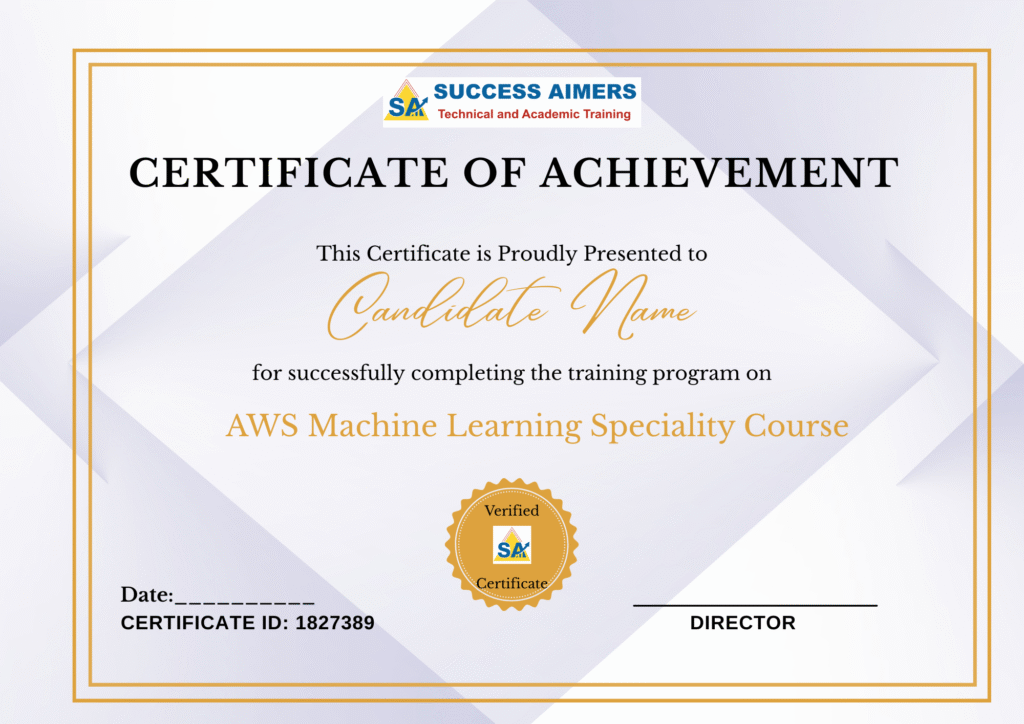
- Get your certificate upon successful completion of the course.
- Certificates for each course
- Gen AI
- Agentic AI
- N8N
- Agentic AI Frameworks
- Azure DevOps
- Azure AI
- AWS Bedrock
- AutoGen
- LangGraph
- LangChain
- Autonomous Agents
- Model Context Protocol (MCP)
- AI Governance
- Vector DB

45% - 100%








Designed to provide guidance on current interview practices, personality development, soft skills enhancement, and HR-related questions

Receive expert assistance from our placement team to craft your resume and optimize your Job Profile. Learn effective strategies to capture the attention of HR professionals and maximize your chances of getting shortlisted.

Engage in mock interview sessions led by our industry experts to receive continuous, detailed feedback along with a customized improvement plan. Our dedicated support will help refine your skills until your desired job in the industry.

Join interactive sessions with industry professionals to understand the key skills companies seek. Practice solving interview question worksheets designed to improve your readiness and boost your chances of success in interviews

Build meaningful relationships with key decision-makers and open doors to exciting job prospects in Product and Service based partner

Your path to job placement starts immediately after you finish the course with guaranteed interview calls
Why should you choose to pursue a AWS Certified Machine Learning Engineer - Associate MLA-C01 & Machine Learning Specialty MLS-C01 certified course with Success Aimers?
Success Aimers teaching strategy follow a methodology where in we believe in realtime job scenarios that covers industry use-cases & this will help in building the carrer in the field of AWS & also delivers training with help of leading industry experts that helps students to confidently answers questions confidently & excel projects as well while working in a real-world
What is the time frame to become competent as a AWS Engineer?
To become a successful AWS Engineer required 1-2 years of consistent learning with dedicated 3-4 hours on daily basis.
But with Success Aimers with the help of leading industry experts & specialized trainers you able to achieve that degree of mastery in 6 months or one year or so and it’s because our curriculum & labs we had formed with hands-on projects.
Will skipping a session prevent me from completing the course?
Missing a live session doesn’t impact your training because we have the live recorded session that’s students can refer later.
What industries lead in AWS implementation?
- Manufacturing
- Financial Services
- Healthcare
- E-commerce
- Telecommunications
- BFSI (Banking, Finance & Insurance)
- “Travel Industry
Does Success Aimers offer corporate training solutions?
At Success Aimers, we have tied up with 500 + Corporate Partners to support their talent development through online training. Our corporate training programme delivers training based on industry use-cases & focused on ever-evolving tech space.
How is the Success Aimers AWS Certified Machine Learning Engineer - Associate MLA-C01 & Machine Learning Specialty MLS-C01 Course reviewed by learners?
Our AWS Cloud Engineer Course features a well-designed curriculum frameworks focused on delivering training based on industry needs & aligned on ever-changing evolving needs of today’s workforce due to Cloud Computing (AWS)
Also our training curriculum has been reviewed by alumi & praises the thorough content & real along practical use-cases that we covered during the training. Our program helps working professionals to upgrade their skills & help them grow further in their roles…
Can I attend a demo session before I enroll?
Yes, we offer one-to-one discussion before the training and also schedule one demo session to have a gist of trainer teaching style & also the students have questions around training programme placements & job growth after training completion.
What batch size do you consider for the course?
On an average we keep 5-10 students in a batch to have a interactive session & this way trainer can focus on each individual instead of having a large group
Do you offer learning content as part of the program?
Students are provided with training content wherein the trainer share the Code Snippets, PPT Materials along with recordings of all the batches
AWS Cloud Certification Training Program in Gurgaon Master AWS Cloud and get prepared for AWS...
AWS Cloud Practitioner Certification Training in Gurgaon Master AWS Cloud and get prepared for AWS...
AWS Data Engineer Certification Training in Gurgaon Master AWS Cloud and get prepared for AWS...
AWS Developer Certification Training in Gurgaon Master AWS Cloud and get prepared for AWS official...
AWS Devops Certification Training in Gurgaon Master AWS Cloud and get prepared for AWS official...
AWS Solution Architect Certification Training in Gurgaon Master AWS Cloud and get prepared for AWS...